

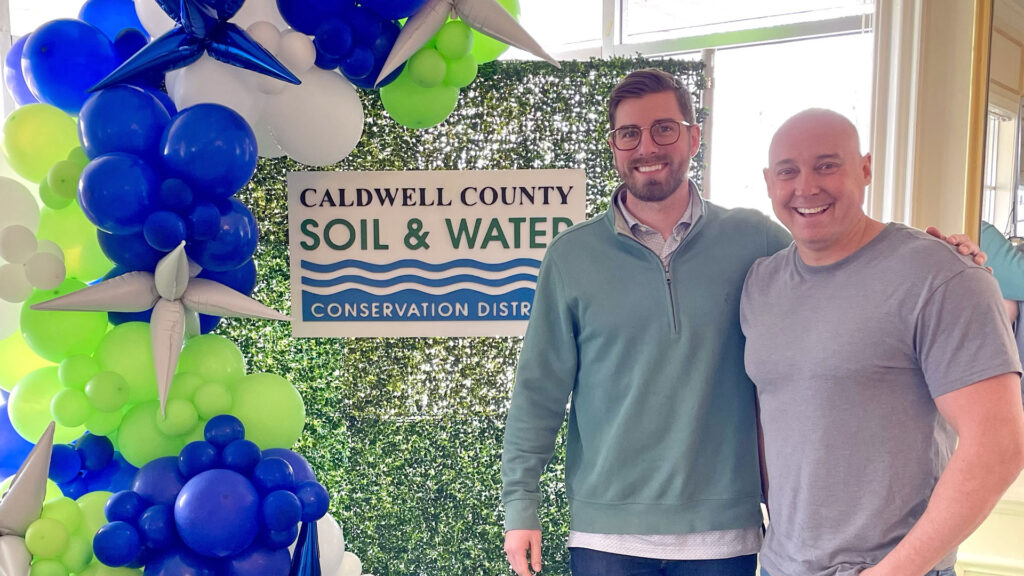
On March 13, 2025, Verenovo had the privilege of presenting at the Soil & Water Conservation District (SWCD) – Area 2 Spring Meeting, held at Cedar Rock Country Club in Lenoir, NC. This event brought together representatives from 13 counties across Western North Carolina, along with members from the Natural Resources Conservation Service (NRCS), to explore strategies for restoring soil fertility.
With the theme, “Restoring Soil Fertility in North Carolina: Exploring the Potential of Biochar,” the event focused on sustainable solutions to improve soil health, enhance crop productivity, and combat environmental degradation. Verenovo was honored to contribute to this discussion by sharing our expertise on biochar’s transformative potential in addressing some of today’s most pressing agricultural and environmental challenges.

A Deep Dive into Biochar’s Role in Sustainability
During our presentation, we provided a comprehensive overview of biochar, beginning with its historical significance and fundamental benefits before addressing modern-day environmental concerns such as crop loss, land degradation, emissions, and infrastructure challenges.
We then highlighted key statistics and scalable applications of biochar across multiple industries, including:
- Agriculture – Improving soil structure, water retention, and crop yields
- Water Filtration – Absorbing heavy metals and reducing pesticide leaching
- Steel Manufacturing & Construction – Offering sustainable alternatives to traditional materials
- Carbon Removal – Acting as a cost-effective, permanent carbon sink
To support our insights, we discussed a variety of peer-reviewed studies, emphasizing biochar’s impact on:
- Water Retention – Increased plant-available water and microbial activity on upland agriculture, as well as improved hydraulic conductivity and reduced runoff on clay soils.
- Crop Yield Enhancement – Demonstrated benefits for wheat, vegetables, maize, and even Christmas tree farming. Notably, one study on maize production showcased the long-term, exponential advantages of a single biochar application.
- Water Pollution Mitigation – Proven effectiveness in absorbing heavy metals and reducing pesticide leaching.
- Carbon Sequestration – Highlighting biochar’s ability to remove 2-3.3 kg of CO₂ per kg of biochar, making it the most cost-effective carbon sink. We also addressed the growing significance of carbon credits, with transactions ranging from $50 to $300 per credit.
Verenovo’s Innovative Approach
In addition to educating attendees about the science and promise of biochar, Verenovo offered a transparent look at its technology platform, business model, and market philosophy—underscoring that biochar is not a silver bullet, but a powerful tool within a broader system of sustainable solutions.
Verenovo highlighted how the biochar industry is evolving through a variety of approaches, each with its own strengths and challenges. The presentation touched on several notable strategies in the market today, including:
- Mobile Biochar Units, which enable on-site processing of agricultural or forestry waste but often face limitations in scale, consistency, and long-term economic viability.
- In-Woods Biochar Production, which focuses on reducing forest fuel loads and converting excess biomass into value-added carbon products—ideal for wildfire mitigation but logistically complex.
- Wood-Focused Biochar Systems, which rely on clean, uniform woody feedstocks to produce high-quality biochar, often with strong energy co-benefits, but can be feedstock-limited and less adaptable to local variability.
Verenovo’s approach stands apart by developing a modular, scalable, and feedstock-agnostic solution that adapts to the unique needs of different communities and industries. Rather than being tied to a single source material, Verenovo’s patented technology is engineered to process a diverse range of organic waste streams—from agricultural residues to forestry byproducts—turning what would otherwise be waste into economic and environmental value.
This model allows Verenovo to deliver economic circularity—creating revenue and soil health benefits from multiple local inputs, rather than requiring expensive or unsustainable supply chains. In doing so, the company builds flexibility into its systems, allowing for deployment across rural, peri-urban, and industrial environments where waste management and soil health restoration intersect.
By presenting this comparative view of the industry, Verenovo emphasized that it does not claim to be the one-size-fits-all solution. Rather, the company views itself as part of a larger, collaborative movement of innovators working to address complex climate and agricultural challenges through practical, science-based tools.
This balanced, grounded approach struck a chord with the SWCD audience—reinforcing Verenovo’s commitment to real-world impact, not hype.
A Word from Verenovo’s COO
Reflecting on the significance of this event, Mick Zulpo, COO of Verenovo, shared his thoughts:
“What we’re seeing right now in the biochar and carbon removal space is a bit of a Wild West scenario. Because the industry is still in its infancy, there are groups taking advantage of the lack of regulation—claiming environmental benefits without the scientific rigor or verification to back them up. At Verenovo, we’re approaching this differently. With our background in emissions science and international regulatory frameworks, we believe it’s our responsibility to help set the standard, not skirt around it. We’re committed to defining what true accountability looks like in this space—grounded in measurement, repeatability, and transparency—so that this industry can scale in a way that’s both credible and impactful.”
Looking Ahead
Looking ahead, Verenovo is focused on delivering high-performance biochar tailored for industrial applications—recognizing that not all biochar is created equal. Through initiatives like the USDA Wood Innovations Grant, the company is refining feedstock-specific formulations to meet strict performance requirements across sectors like green steel, water filtration, and soil enhancement—ensuring that product design is driven by end-use, not generalization.
Thank you to the Soil & Water Conservation District and NRCS representatives for allowing us to share our vision. We look forward to continued partnerships and collective efforts in advancing sustainable solutions across North Carolina and beyond.
For more updates on our work and upcoming events, stay connected with Verenovo!